(Source du texte: museeorsay.fr)
Entre 1899 et 1900, Léon Spilliaert (1881-1946) suit pendant quelques mois les cours de l’académie de Bruges. C’est donc en quasi-autodidacte qu’il dessine son premier autoportrait, daté du 2 décembre 1902. Si cette première tentative se révèle d’un réalisme appliqué et presque académique, les dessins postérieurs vont se montrer beaucoup plus audacieux.
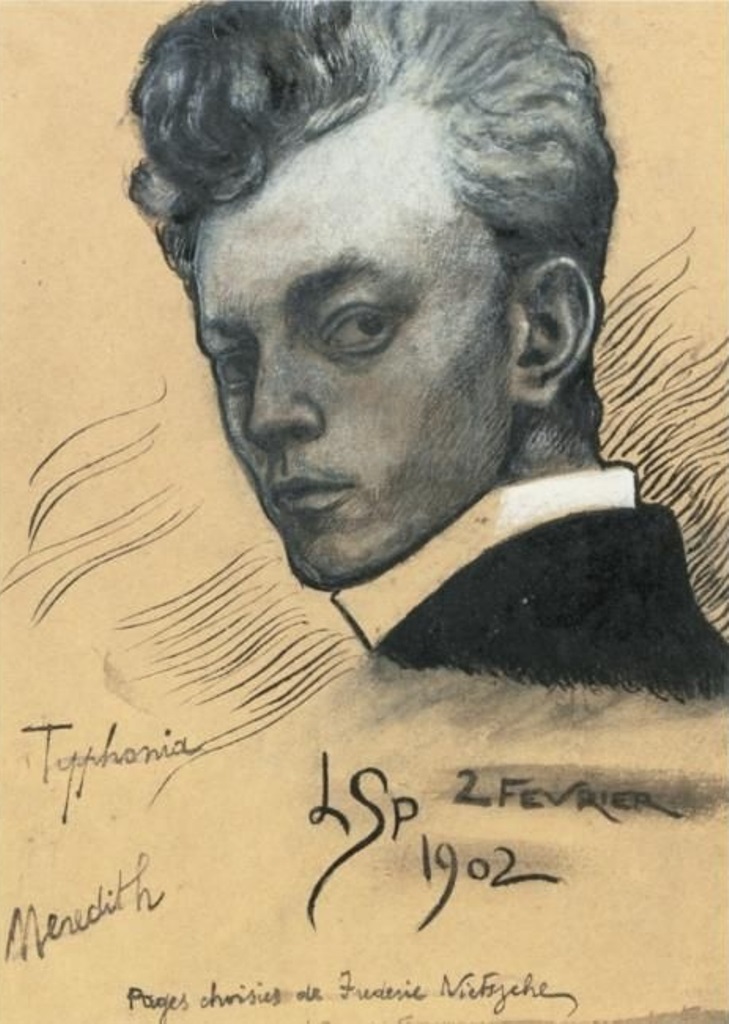
Léon Spilliaert. Autoportrait 1902
A partir de septembre 1902, Spilliaert commence en effet à réaliser des illustrations pour Edmond Deman, un important éditeur bruxellois. C’est par son intermédiaire qu’il découvre l’oeuvre de Fernand Khnopff, Théo Van Rysselberghe, George Mine, Félicien Rops et James Ensor, mais également celle de Français comme Odilon Redon.
Dans les autoportraits de Spilliaert, on peut distinguer une évolution vers toujours plus d’introspection et d’ abstraction. Ses premiers autoportraits le montrent en costume, de profil. Spilliaert s’est ensuite représenté de face, fixant le miroir de manière inquiétante. La mélancolie et la rigueur de ses autoportraits rappellent l’expressionnisme, tandis que leur jeu avec le clair-obscur évoque les estampes japonaises
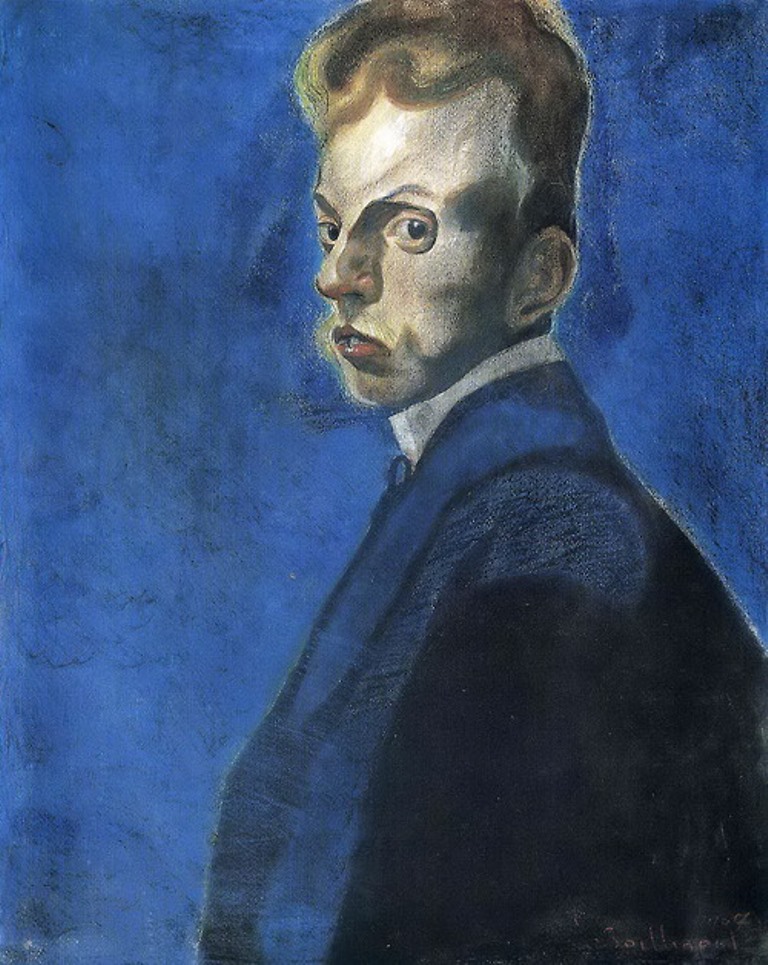
Léon Spilliaert. Autoportrait 1907
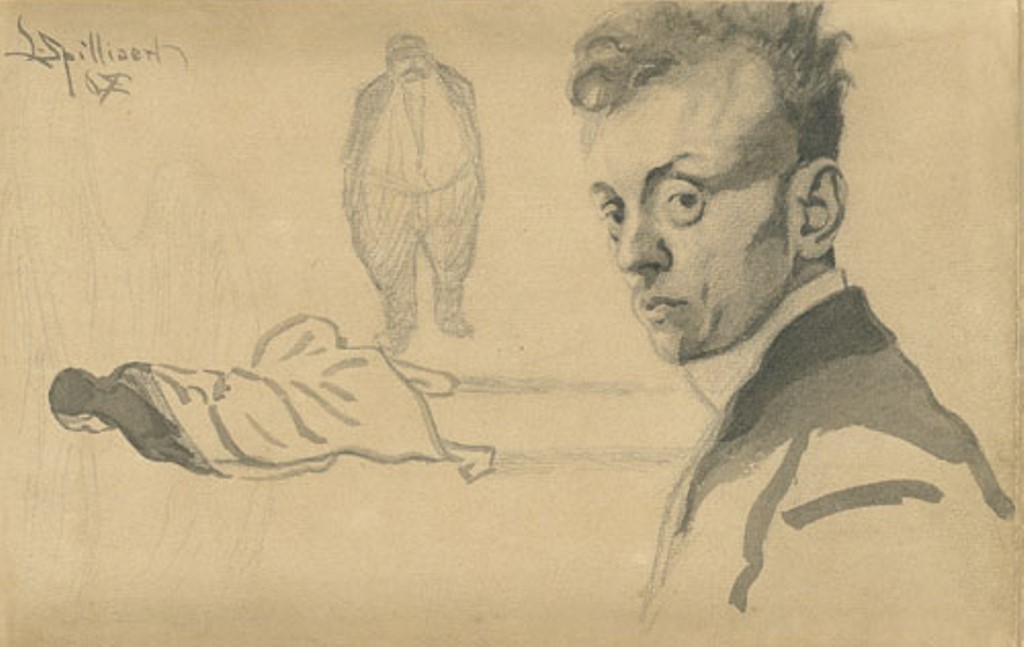
Léon Spilliaert. Autoportrait 1907-1909. Dessin
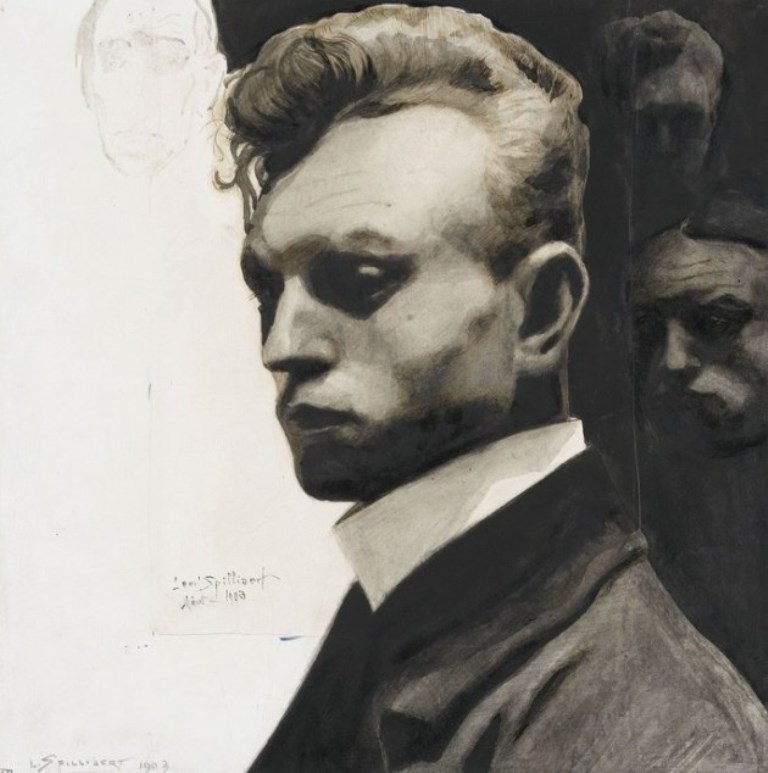
Léon Spilliaert. Autoportrait 1903
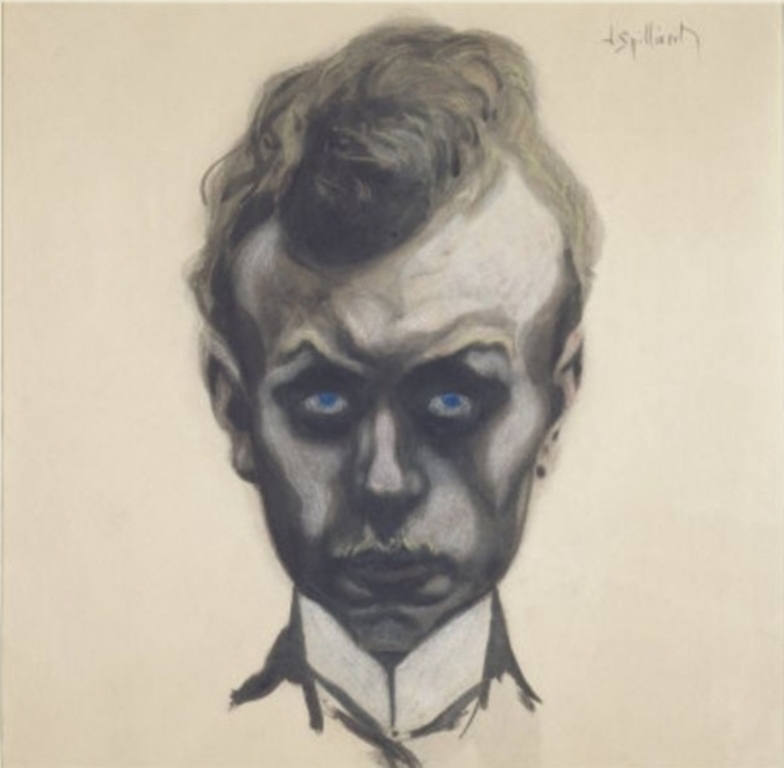
Léon Spilliaert. Autoportrait 1903
Spilliaert réalise alors des autoportraits dans lesquels l’introspection se révèle plus complexe et plus pénétrante que dans celui de 1902. C’est notamment le cas de L’autoportrait dit « aux masques » en 1903. La physionomie tourmentée, aux yeux perdus dans l’ombre profonde des orbites, est dramatisée par la pose de trois quarts, qui laisse dans l’indétermination toute une partie du visage. Cette évolution vers l’expressionnisme conduira à des interprétations hallucinées, puis macabres (l’Autoportrait au miroir, 1908).
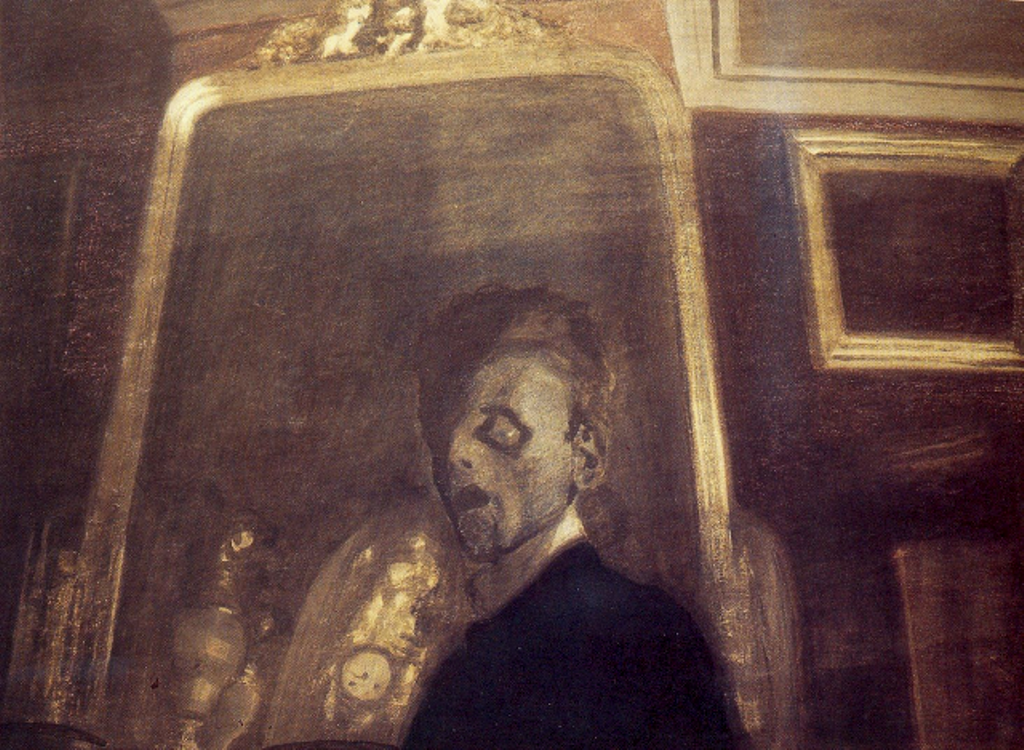
Léon Spilliaert. Autoportrait au miroir 1908
Dans une lettre à Paule Deman, fille d’Edmond, datée de fin 1904, Spilliaert décrit d’ailleurs lui-même son caractère comme « inquiet et fiévreux ». La souffrance physique que lui causera plus tard la maladie – il sera atteint d’un ulcère à l’estomac – accentuera cette disposition.
Spilliaert explore les possibilités de l’autoportrait avec beaucoup d’intensité jusque dans les années 1907-1908, période décisive qui voit naître l’essentiel de cette production. Le thème du miroir devient à cette époque un élément récurrent de ses autoportraits. La relation de Spilliaert à cet objet créateur d’image, comme l’artiste, oscille alors constamment entre séduction et répulsion.

Léon Spilliaert. Autoportrait 1907
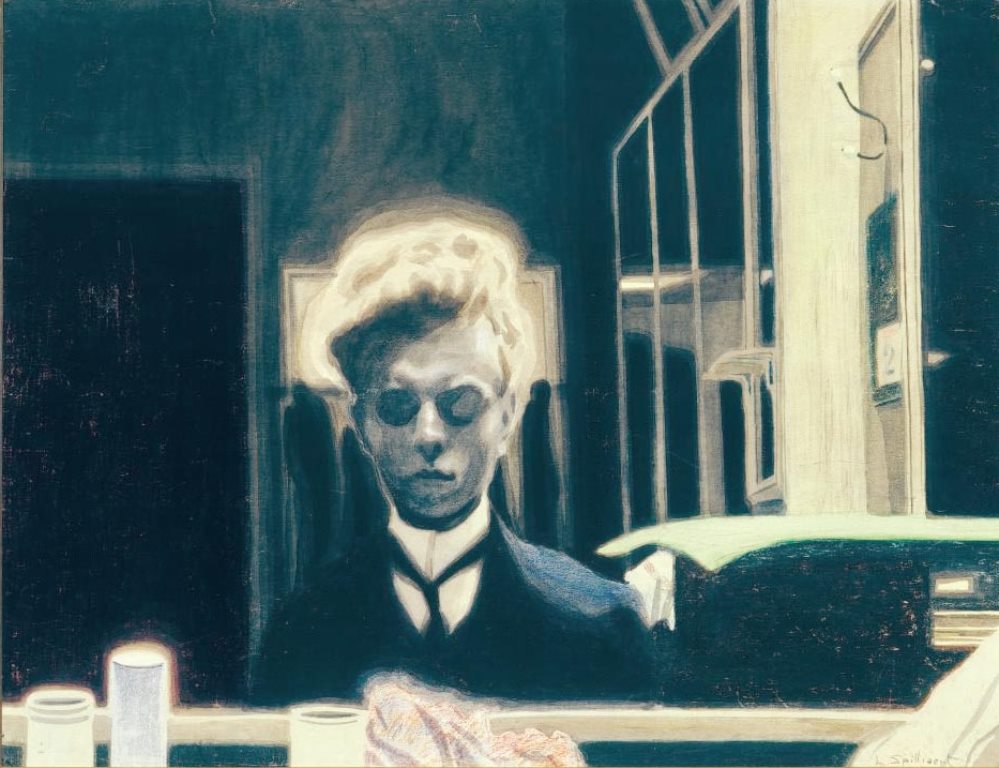
Léon Spilliaert. Autoportrait 1908
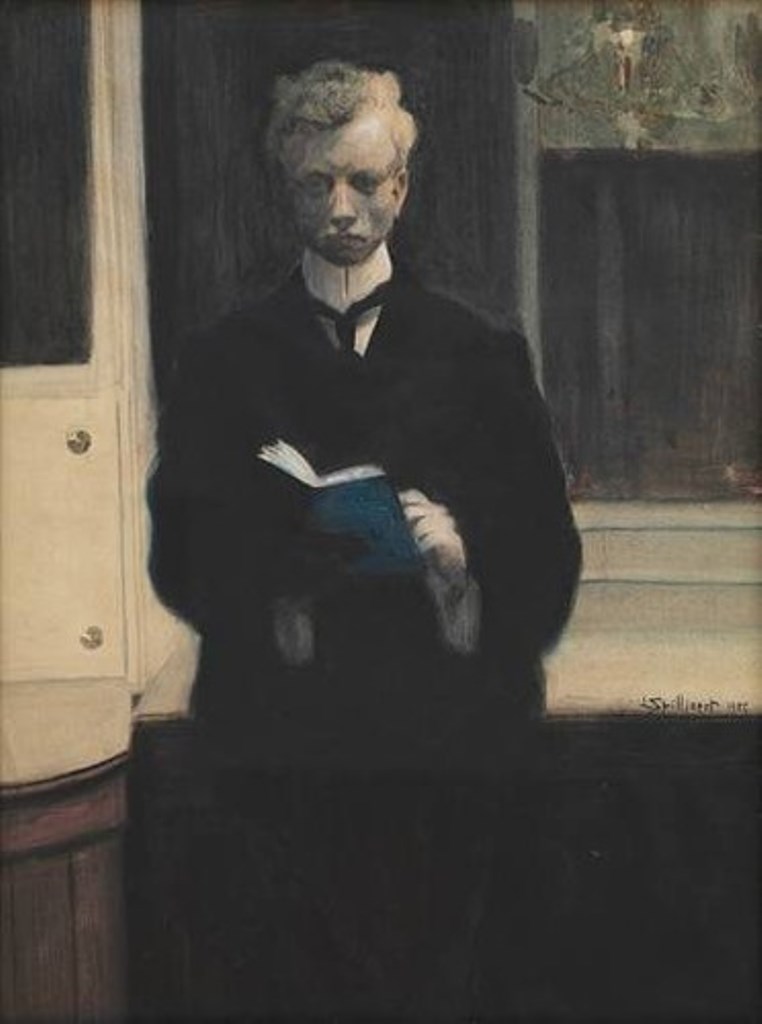
Léon Spilliaert. Autoportrait 1907
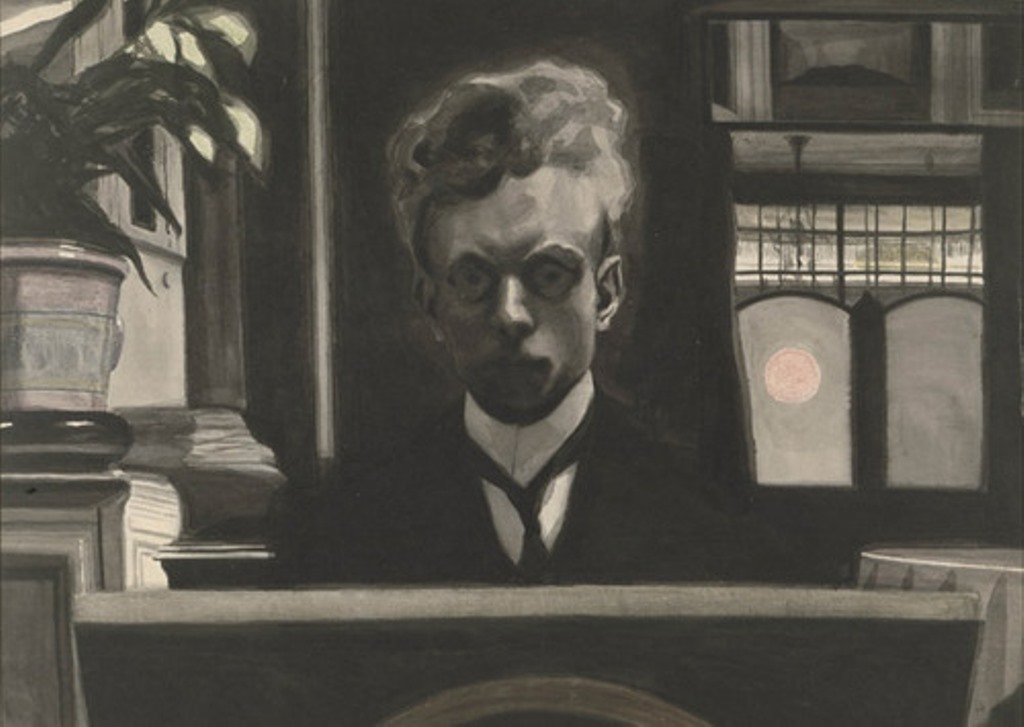
Léon Spilliaert. Autoportrait 1908
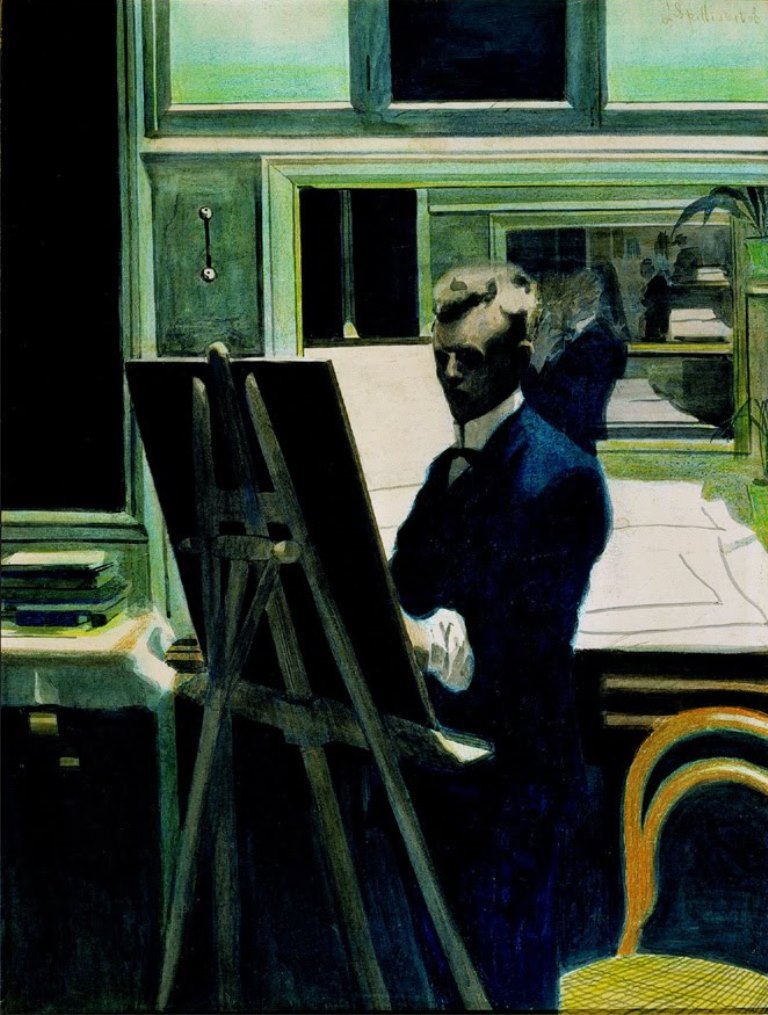
Léon Spilliaert. Autoportrait 1908
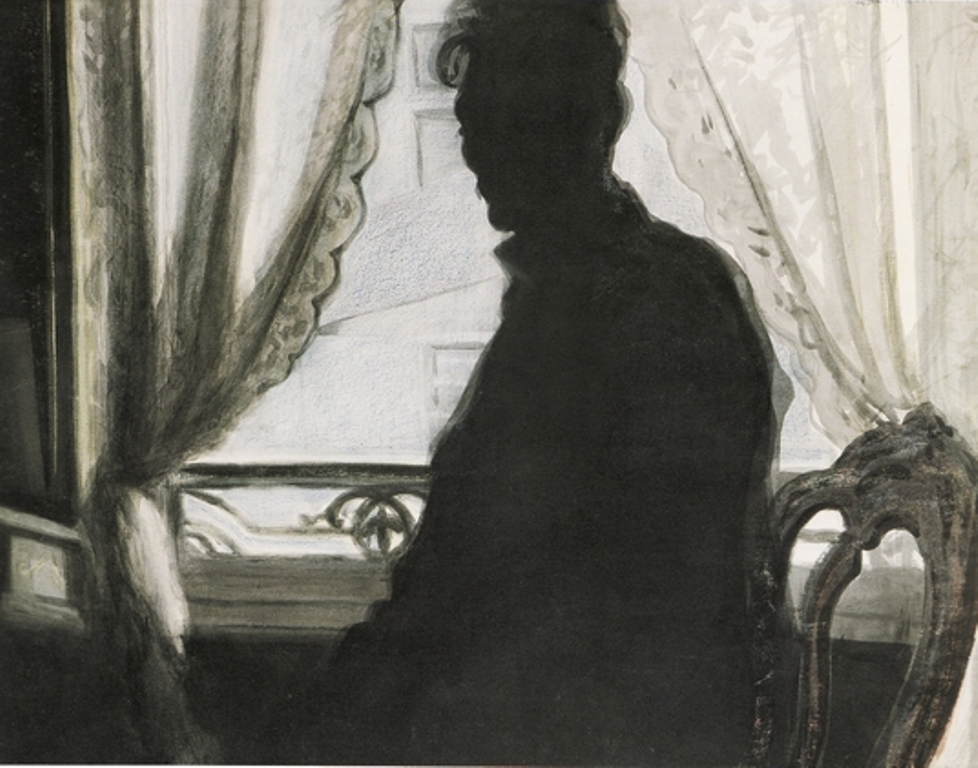
Léon Spilliaert. Autoportrait 1907

Léon Spilliaert. Autoportrait 1909

Léon Spilliaert. Autoportrait 1911
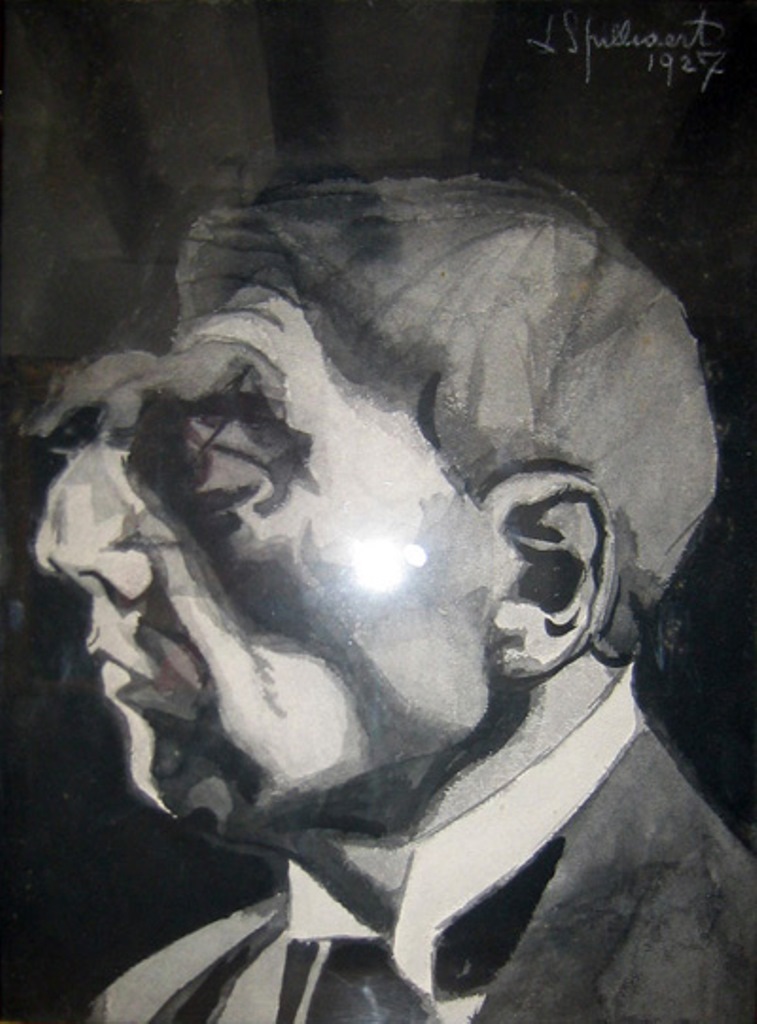
Si Spilliaert par la suite délaisse quelque peu le thème de l’autoreprésentation, il ne l’abandonnera jamais totalement et y reviendra à plusieurs reprises au cours de sa carrière. La pratique de l’autoportrait est le coeur de la recherche du peintre, qui a ainsi multiplié les visions les plus insolites et troublantes de lui-même.



 DantéBéa